

Reflections on the 2026 Trade & Sustainability Hub: Africa in the Global Green Economy | Ibrahim Garba
- Open Dreams

- Apr 5
- 2 min read
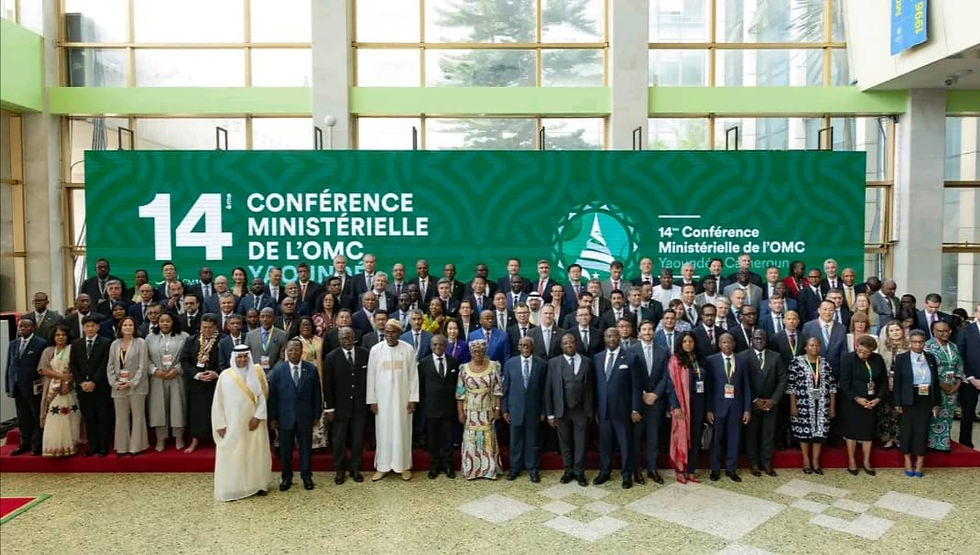
The Trade and Sustainability Hub (TSH), organized by the International Institute for Sustainable Development (IISD), recently concluded at the Hilton Hotel in Yaoundé. Held from March 26 to 28, 2026, on the sidelines of the World Trade Organization (WTO) Ministerial Conference, the event gathered approximately 200 participants, including policymakers, international experts, industry leaders, and researchers. As an attendee focused on Community development and international cooperation, I found the discussions provided a critical roadmap for integrating trade policies with climate imperatives.
Strategic Priorities for Africa
The Hub served as a laboratory for analyzing how international trade can drive inclusive development. Central to the dialogue was the African Continental Free Trade Area (AfCFTA) and its role in Africa’s economic transformation. A primary concern raised was ensuring that Africa does not remain a mere supplier of raw materials. To capture value-added benefits, the continent must prioritize accelerated industrialization and the development of green infrastructure.
Key sessions focused on:
● Industrial Decarbonization: Exploring low-carbon strategies for steel and aluminium, the latter often called the "solar metal" for its necessity in the energy transition.
● Critical Minerals: Discussing the energy transition and the need for technology transfer to the Global South.
● Digital Trade: Identifying success conditions for SMEs, including reduced transaction costs and the harmonization of cross-border regulations.

Sustainability and Circular Economy
The intersection of environmental standards and trade governance was a recurring theme. Experts noted that 90% of thermoplastics are currently not recycled, representing a significant untapped resource for a circular economy. Furthermore, the event addressed the WTO Agreement on fisheries subsidies, highlighting the need to protect marine resources and the survival of artisanal fishing communities. The overarching sentiment was clear: trade can no longer be conceived independently of climate imperatives. However, as noted during the sessions, global standards must be defined with Africa’s involvement to prevent further marginalization.


Quality of Engagement and Hospitality
Beyond the technical sessions, the quality of organization at the Hilton Hotel facilitated high-level networking and knowledge exchange. The diversity of participants, ranging in age from 22 to 55, ensured a wide variety of perspectives. The hospitality extended by the IISD team, from the seamless logistics to the international standard of the closing dinner, created an environment where participants felt truly valued. These interactions are essential for fostering the international cooperation required to align trade policies with the UN Sustainable Development Goals (SDGs) and AU Agenda 2063.

A Commitment to the Future
The 2026 Trade and Sustainability Hub was a pivotal moment for rethinking global trade governance. It underscored that while the challenges are significant, including limited administrative capacity and rising geopolitical tensions, the potential for a fairer, more sustainable trading system is within reach.

As we look forward, it is vital to continue these collaborations, ensuring that Africa remains a primary architect of its own economic and environmental transformation. I look forward to contributing to future editions of the Hub as we champion a more inclusive global trade landscape.
Ibrahim Garba - Founder AYSA AFRICA | Open Dreams Scholar


Comments