

When You Go Back: A School Outreach Across Nkambe | Martha Mburli Lingong
- Open Dreams

- Jun 24
- 6 min read
There is a saying I have held onto for years: education changes lives. Yet it was only when I returned to Nkambe, the town that nurtured me, that I truly understood the full weight of that truth. Not as a slogan, not as a development buzzword, but as a living reality reflected in the faces, aspirations, and stories of the young people I encountered across every classroom I entered.

Over the course of this outreach, I visited secondary schools, teacher-training institutions, professional colleges, and higher education institutions across Nkambe and its environs. My journey took me to GBHS Nkambe, GTHS Nkambe, St. Rita's College, PHS Nkambe, GTTC Nkambe, the Higher Institute for Professional Development and Training (HIPDET), the Nkambe University Institute of Science and Technology (NUIST), Academic Fellowship Cameroon, and the Bendeca Yellow Digital Centre in Binka. While each institution had its own unique character, they all shared something remarkable: young people eager to learn, eager to grow, and eager to understand what possibilities exist beyond the horizon they can currently see.
As someone who has spent years working in education, mentoring scholarship applicants, and supporting youth development initiatives, I have come to appreciate that talent is not the issue, ambition is not the issue, neither is potential is certainly the issue. More often than not, the challenge is access to information, mentorship, networks, and opportunities.
At GTHS Nkambe, one of the largest technical institutions in the area with a student population exceeding 3,500, I was struck by the energy of the environment. The classrooms were full, infrastructure projects were underway, and students were preparing for examinations that many viewed as defining moments in their educational journey. Speaking to them, I emphasized that examinations are important, but they are only one measure of preparation. The same discipline required to excel academically is the discipline required to compete for scholarships, pursue leadership opportunities, and thrive in increasingly competitive global environments. I encouraged them to think beyond grades and begin developing the skills, attitudes, and experiences that make individuals stand out when opportunities arise.
At St. Rita's College, the conversations quickly moved beyond examinations. The students wanted to know about university admissions, scholarships, leadership programmes, and careers. They were curious not simply about passing their exams, but about what comes next. Their questions demonstrated that young people are often thinking much further ahead than we assume. What they need is guidance to transform aspiration into action. I shared with them a principle that has guided much of my own journey: opportunities rarely arrive fully formed; most often, they are the result of years of preparation. The students who position themselves early are often the ones ready when opportunity eventually knocks.
My visit to GTTC Nkambe was deeply personal. Walking through the corridors of the institution where I graduated in 2010 brought back memories of a younger version of myself who could never have imagined the journey ahead. Standing before a new generation of student teachers, I reflected on the profound role educators play in shaping society. Teachers are not merely transmitters of knowledge, they are builders of confidence, nurturers of talent, and architects of possibility. I encouraged the student teachers to view professional development as a lifelong commitment because the quality of their own growth will ultimately influence the quality of the lives they touch.
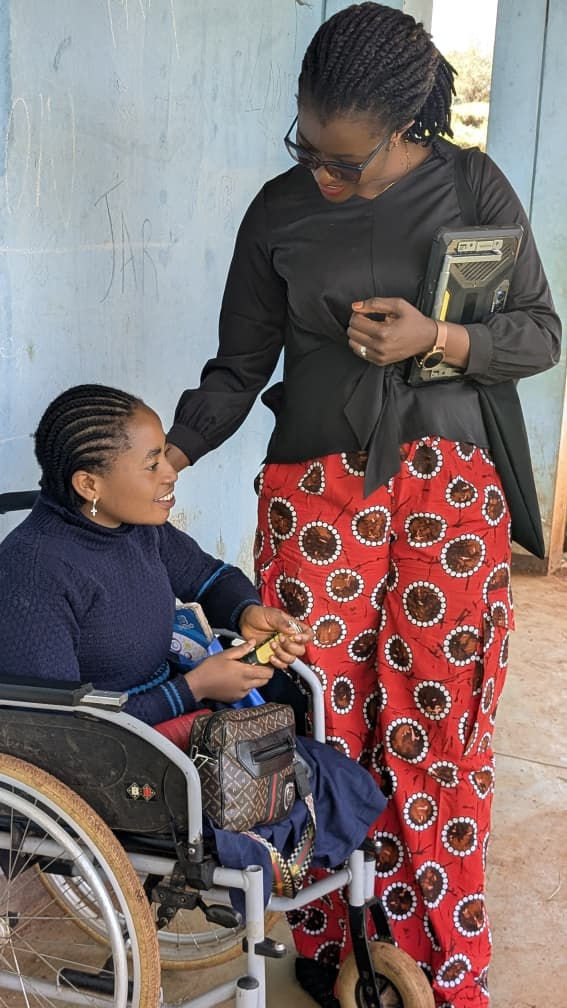
Among the many encounters during the outreach, one remains particularly unforgettable. At GBHS and GTHS Nkambe, I met two young students named Maline and Emmanuela, who are survivors of the 11 February 2024 bomb blast that claimed both of their legs. When I asked about their aspirations, they answered without hesitation that they both wanted to become a computer engineer. Their responses stopped me in my tracks because, despite all they had endured, they spoke not about their limitations but about their futures. I did not see victims, I saw resilience, courage, and I saw young women who had decided that their circumstances would not determine their destinies. In many ways, Maline and Emmanuella became one of the most powerful symbols of what education represents: hope, possibility, and the ability to imagine a future beyond present realities.
The conversations at HIPDET focused heavily on scholarships and educational advancement. Many students were eager to know where opportunities could be found and how they could position themselves to compete successfully. These discussions reinforced something I have observed repeatedly throughout my work with young people: many talented students miss life-changing opportunities not because they lack ability, but because they lack information. The process of becoming competitive begins long before an application is submitted. It begins with academic commitment, community involvement, leadership experiences, and intentional preparation. Helping students understand this process remains one of the most important forms of educational empowerment.
A similar message resonated during my visit to the Bendeca Yellow Digital Centre in Binka, where young people were participating in a Summer Code Camp. Technology is reshaping the world in unprecedented ways, creating opportunities that transcend geography. As I interacted with the participants, I spoke about how digital skills can open doors to remote work, entrepreneurship, innovation, and global careers. What excited me most was watching the moment many of them realised that their future is not limited by where they come from. Technology increasingly rewards preparation and competence rather than location, making it one of the most powerful tools available to young people today.
Then came a moment I could never have planned for. During a visit to NUIST, I sought to meet an administrator to discuss the possibility of organising a scholarship information session. The Dean of Studies came forward, and after we introduced ourselves, she smiled and said, "You taught me in Form One at GBHS Nkambe."
For a moment, I was speechless.
Standing before me was a university leader who had once sat in my classroom. It was one of those rare moments that reassured educators why their work matters, as we often never see the full impact of what we do. We plant seeds without knowing where they will grow. Yet here was living proof that those seeds had taken root and flourished. The encounter was both humbling and deeply rewarding.

Returning to GBHS Nkambe, my alma mater, brought another wave of reflection. This was the school that first gave me a voice and later gave me an opportunity. After my Advanced Level results, I taught there as a PTA-employed teacher, handling twenty-eight periods a week for a salary of 24,000 FCFA. By any standard, it was modest. Yet it was one of the most significant opportunities of my life because it opened doors I had not even known existed. Standing before the students during this outreach, I realised that I was not simply sharing information. I was offering them something I never had at their age: exposure to possibilities beyond their immediate environment and the confidence to believe they are worthy of pursuing them.
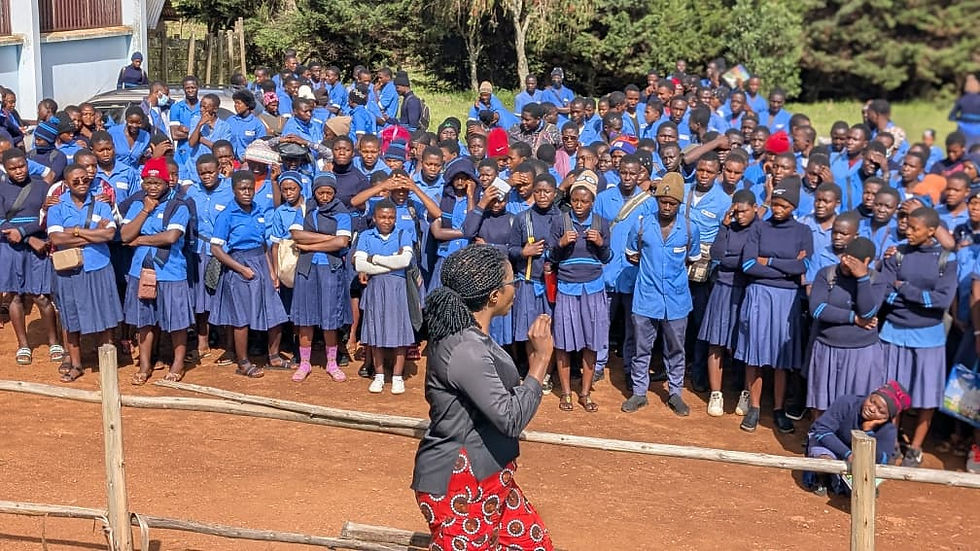
The outreach also created an opportunity to provide practical support. Through the generosity of an anonymous former student, writing materials were distributed to more than 300 students preparing for the GCE examinations at GBHS Nkambe. The gratitude expressed by the students made me realize that meaningful impact often comes through simple acts of generosity. Sometimes changing a life does not begin with a scholarship, sometimes it begins with mentorship a notebook and a pen.
Perhaps the most important lesson I carried away from this outreach is that information itself is a form of equity. When a young person does not know that scholarships exist, that international exchange programmes are available, that remote work opportunities are accessible, or that universities across the world actively seek talented students from diverse backgrounds, that lack of information becomes a barrier. Access to information expands choices, expanded choices create opportunities and opportunities change lives.
I left Nkambe deeply encouraged and fulfilled, not because every challenge facing young people has been resolved, but because I witnessed extraordinary potential in classroom after classroom. I met future educators, engineers, entrepreneurs, researchers, and leaders, and most importantly, I met young people who are ready to dream, ready to work, and ready to seize opportunities when they are presented.

This outreach reaffirmed something Open Dreams has always believed: talent exists everywhere, but opportunity does not. Our collective responsibility is to bridge that gap through mentorship, exposure, guidance, and support. Sometimes all it takes is one conversation to change the direction of a life.
Education cannot wait.
And neither can they.
Martha Mburli Lingong | Commonwealth Scholar | Safe School Declaration Lead | Open Dreams


🥳🔥